Sunday, April 17, 2005

Musings, La Paz, Bolivia

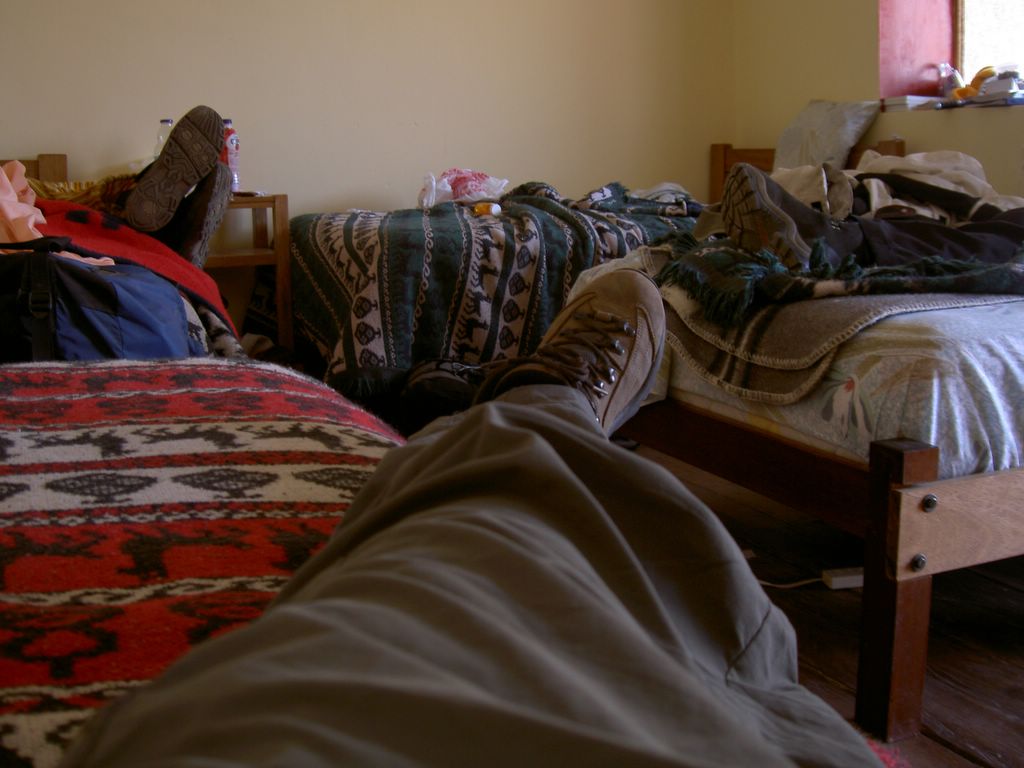
Diane: Although I had anticipated only a day or two of rest in La Paz to split up a 20 hour bus/train ride, we ended up staying 6 days. Everybody but me was strongly affected by the altitude. The airport in La Paz is at around 4000 meters above sea level. Most of the city is built on a downward slope from about 4000 to about 3500 meters above sea level. Although Cusco is at 3300 meters and we didn't suffer there, La Paz was a different kettle of fish. We found an apartment on the tenth floor with lots of light and a great view of the city. Julia, the amiable owner is a single woman and she rents out 2 small bedrooms - one with two twin beds and one with a full-sized bed. With my usual flair for timing, it was as if she was waiting for us, since neither room was occupied. The alternative accommodations in the city center were overpriced, smelled terrible, had tremendous street noise, or were just plain decrepit, so this was a great find!

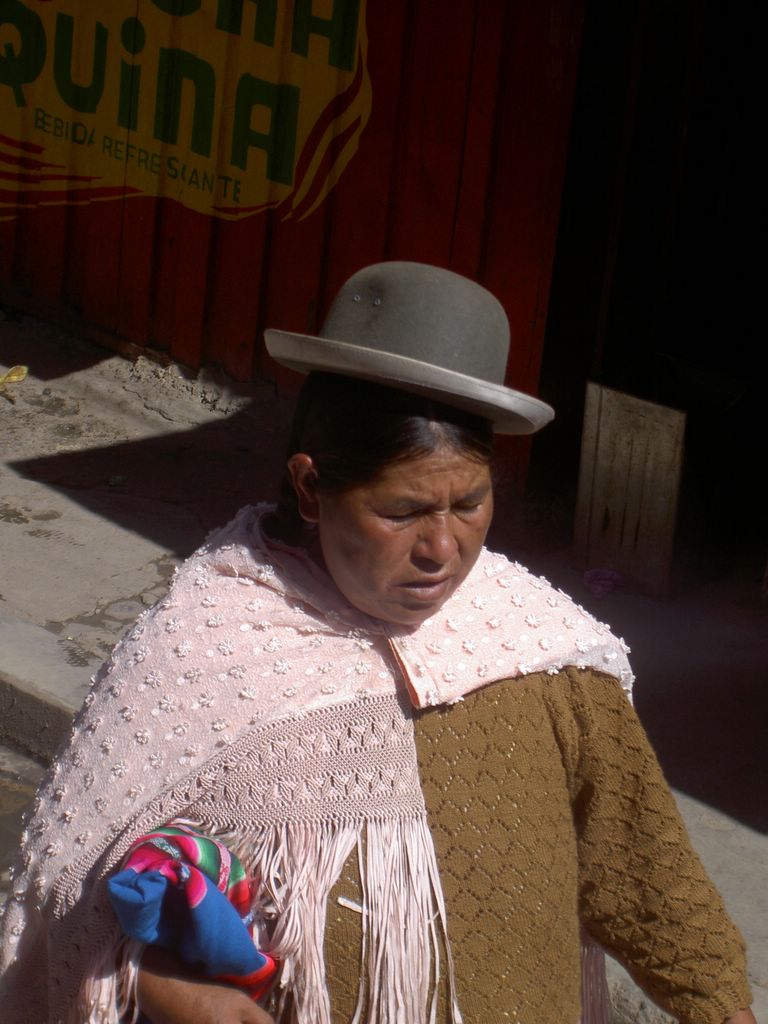
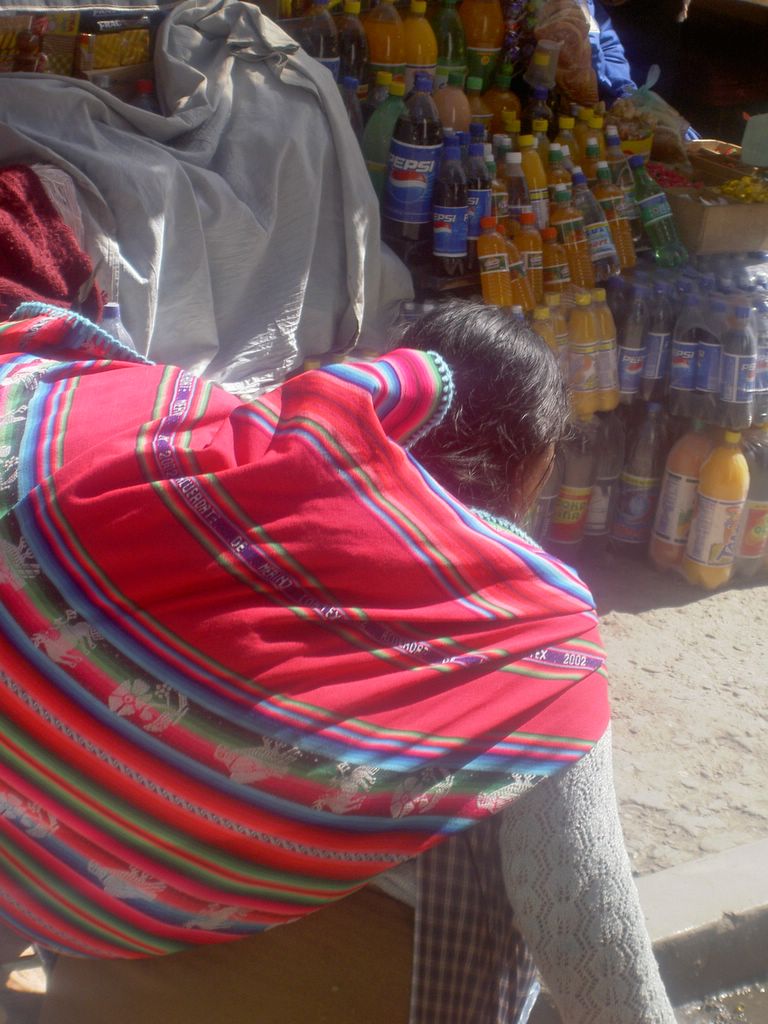
Although a big, dirty city with lots of poverty, I am very comfortable in La Paz. There are several vegetarian restaurants to choose from within a short radius of our apartment. Even better, a lot of the street food is vegetarian. There are lots of street vendors who make carrot juice or orange juice right on the spot - and not the watery, gloppy juice I learned to avoid in most of Peru. There is a lot of hustle and bustle, but most of it is not directed at foreigners, so it feels very authentic after a couple of weeks in the Sacred Valley of Peru, whose economic base is tourism. As in most cities we have visited, many of the women continue to wear their traditional clothing. But here, it feels like a much larger percentage continues their traditions. At this altitude, the temperature is generally cold year round. Consequently, the women dress in layers, so to my eyes many of them are an unexpected Christmas-tree shape when all is said and done. There embroidered blouses and shawls shimmer a bit in the daylight. Many women street-vendors wear colorful blue and white checked aprons. None of these women used backpacks; they used the colorful blankets of the region to cart their loads. The ubiquitous bowler hats complete their wonderful outfits. I'm still hoping for some good pictures of this to show up on my computer.


Since we stayed so long, I had an opportunity to tour some of the city's more interesting museums. The Coca Museum chronicles the long and somewhat convoluted history of the use of coca leaves in Bolivia. I am aware that the United States has been heavily involved in attempting to eradicate the drug economies and fields of many South American countries, but there was a lot more to it. For example, during colonial times, there was a double standard. Spain made the use of coca illegal in Spain, but legalized it in Bolivia, with the intent of increasing the hours worked by the indigenous miners. To this day, miners live and work in substandard conditions.

Calliope and I went to a street fair on the Prado today. Half of it looked like street fairs at home, with public safety displays, games and races for kids, dancing groups, people hamming it up in costumes, and jugglers.


But, the other half was almost entirely political. Huge illustrated panels explained the plight of miners. And I wasn't the only one reading them. Each block held a new petition to sign. Several important indigenous rights activists are being held indefinitely in detention in La Paz without trial. There were bands with anti-free-trade songs. As I understand it, Bolivia is the poorest, most exploited South American country. There are strikes here regularly that affect everything from the availability of food to the passage of traffic on primary roads. With such a highly activist population, I do not understand why some sort of justice has been so slow to get here. There must be so many unpublicized tragedies here.

I also had time to visit the Museum of Musical Instruments. Not many cultures could support an entire museum devoted to musical instruments, but Bolivia has a strong and vibrant musical history. The guitar and its many variants are standard fare in Bolivia as well as the rest of South America. Young men grow up learning to play the guitar in order to serenade the women of their dreams. The museum displayed guitars made from animal hides and shells and in many shapes and sizes.


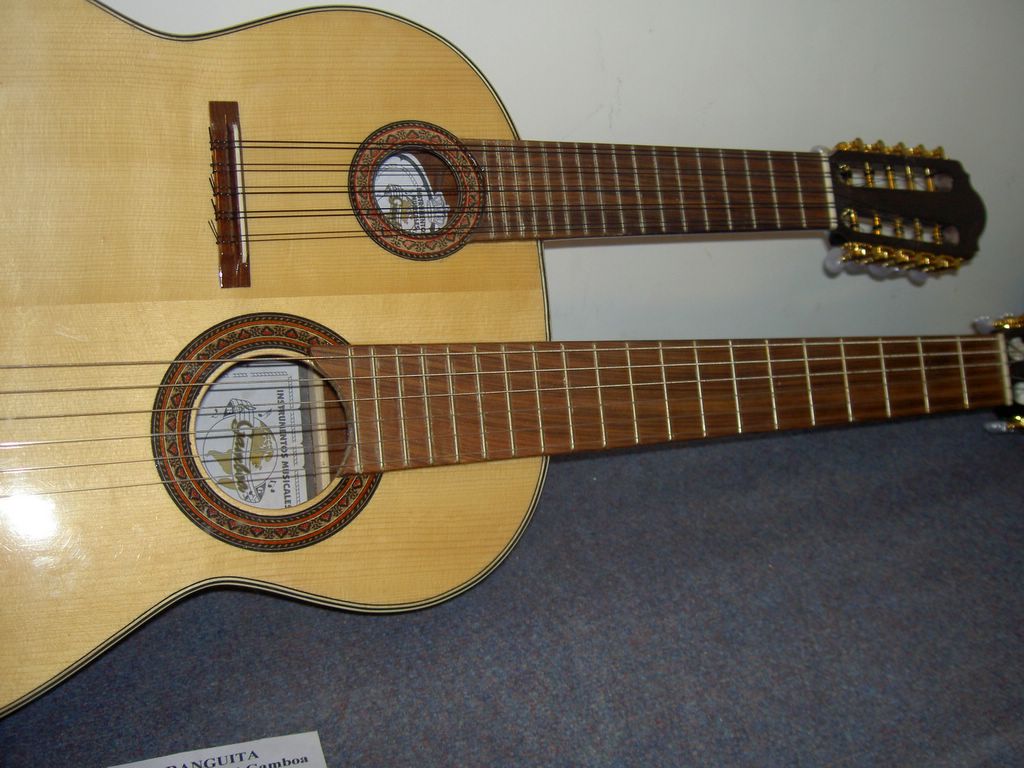
There was one room dedicated to musical inventions. I'm not sure how you'd play a two necked guitar, but the display certainly got me thinking.


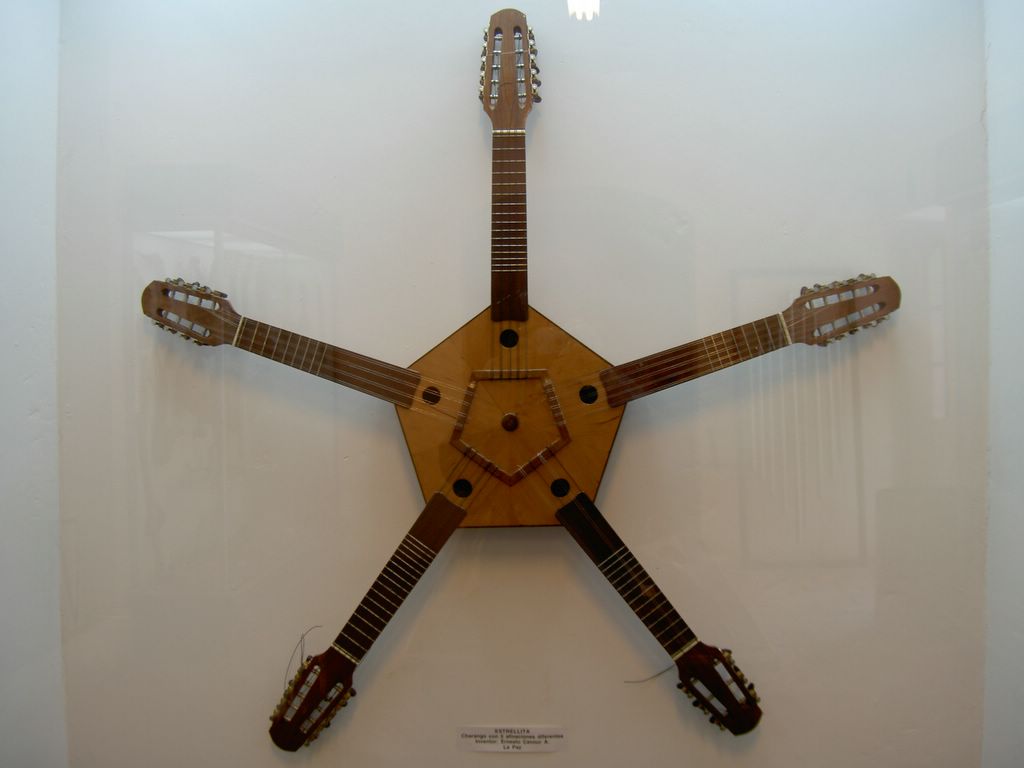
How about a 5 necked stringed instrument?


There are many traditional percussion instruments as well. Many shaker-type instruments are made from various plant products. But some are made from metal.


Yet others are made of coins!


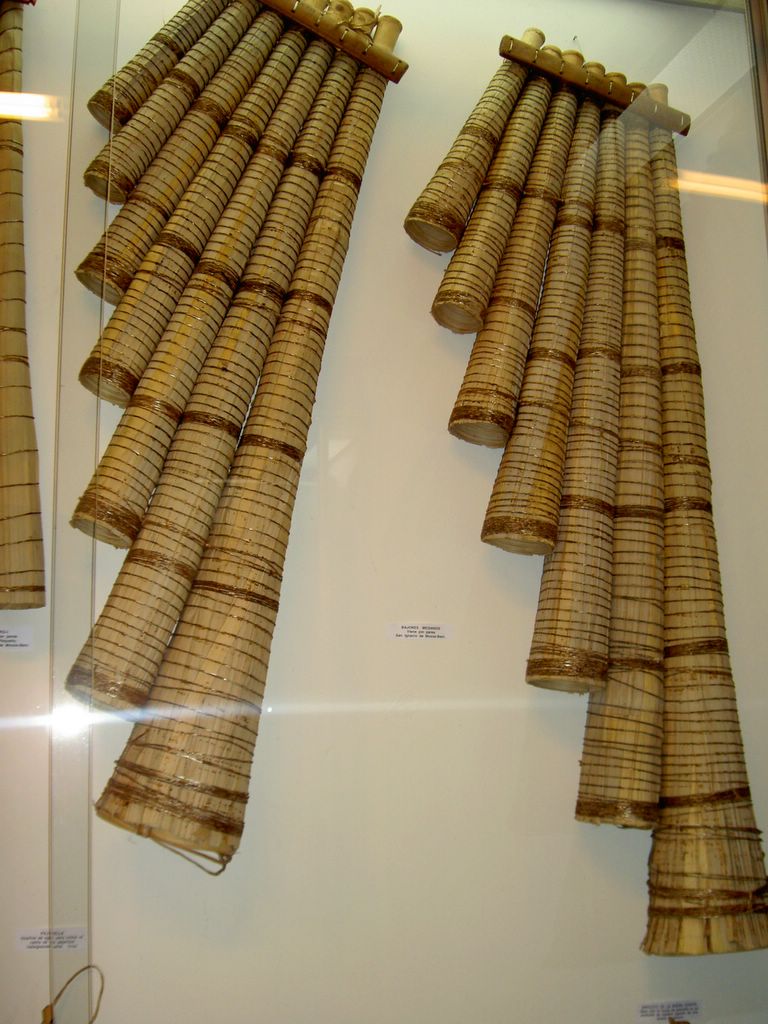
As in Peru, wind instruments play a large role in the musical sounds of Bolivia.


Evidently, as in Peru, no Bolivian museum is complete without a mummy.


Although the mummy was an antique, many of the instruments on display were made recently. The art of making musical instruments is alive and kicking in Bolivia.

A couple of days ago, I lured TM out of bed to join me in a short expedition in search of the perfect acne cure. I had seen the impressive witch's market in Chiclayo, but the one in La Paz was larger with a wider selection, so I figured our chances for success were pretty good. There were a lot of love potions,


llama-fetuses,


thank-you offerings,


and cures for the most incurable of conditions.


Really, they seemed to have just about everything, except acne cures. And then it hit me - the indigenous people here don't get acne. So of course they wouldn't be selling acne cures.

Monday, April 11, 2005

Most-Crowded Aisle on a Bus to Cusco, Peru

Diane: Yesterday, Tom and I took the local bus from Pisac to Cusco. Since we hopped on in the middle of the route, it was no surprise that most of the seats were taken. There were two aisle seats next to each other, and another couple of empty seats in the very last row. We nabbed the aisle seats and talked a bit about where we want to go next. I am all for heading down to the Salar de Uyuni, whereas Tom still wants to go to Lake Titicaca.

Within about 15 minutes, we had picked up a boatload of young school-children who filled the center aisle of this bus. Bodies now obscured Tom's face and we could no longer talk. A teenage woman was leaning all over the back of my seat and onto where my head was resting. Additionally, squeezed between her and the seat in front of me were 2 small boys - one standing awkwardly along my armrest and the other bent at a 45 degree angle over my legs. And that was just on my side of the aisle. On Tom's side, there was an adult taking up half the aisle.

I started thinking about taking a picture to show just how crowded the aisle of a bus could get. I wasn't sure I'd be able to get far enough away at a good angle to capture all the bodies. As it turned out, those thoughts were irrelevant, because with this many people leaning over me, I didn't have enough room to reach my daypack, which was sitting between my feet and legs.

Within another 5 minutes, a group of adult-sized students had boarded the bus. Although hard to imagine, 2 of these large newcomers had squeezed beside the 3 people next to me. There were now 6 people standing in the aisle separating Tom and me. This was an ordinary-sized aisle, perhaps a little smaller than usual, but certainly not larger. I could neither hear nor see Tom at all.

At this point, I spotted the bus assistant 2 rows in front of me collecting fares. I struggled to get some money out of my pocket. But the assistant struggled a lot more than I did. Nobody would make way for him, so he had to pick people up and move them forcefully to make his way through. This was full-body-contact bus-riding for those in the aisle. As a seated passenger, I felt that I was getting VIP service. I paid the fare for both Tom and myself, but the bus assistant returned it to me. This was a first. As I sat contemplating this, I heard Tom's voice wafting my way, saying that he'd already paid the fare.

With people hanging in all directions, the windows were pretty much blocked in all directions. It seemed that I would have to use my finely-honed intuition to decide when to get off this bus, or wait until the end-of-the-line. Luckily, the end-of-the-line turned out to be our stop :-). Although this challenging busride was over for us, I realized that these school-kids must ride this severely overcrowded bus every day to school.

Sunday, April 10, 2005

Pisac, Sacred Valley, Peru

Diane: While in Cusco, we had stumbled upon Ana, our German friend who was studying Spanish in Cuenca when we arrived. She had broken up with her boyfriend from Germany, before embarking on her trip around Ecuador and Peru. Without having to worry about the wishes of a fellow traveler, she ended up living and working in Cusco. She is helping at a local primary school, and she lives on the premises. Since we last saw her, she has had several Peruvian boyfriends, has decided to put off going to University (perhaps indefinitely), and now prefers to speak with us in Spanish rather than English.

After several months in Cusco, she was also well-versed in the local disco scene. Which worked out quite well, since we had decided to go out dancing for Paul's final night before returning home. After we sorted out the various levels of sickness and tiredness amongst us, Miki, Calliope, Ana, and I finally hit the dance floor of what seemed the least-crowded venue around (not!). As we danced, various friends of Ana's joined us. Like Ana, they were young blond women, which seemed strange since we haven't stumbled across many young blond women in our travels in Peru. There were lots of interesting things to comment on about the evening, including -


  • why we didn't pay a cover charge, even though there were men at the door who appeared to be collecting money,

  • one Peruvian who wanted to dance with our group of 6 foreign women asked Miki's permission to dance with us,

  • Ana and her German/Swedish/?? friends seemed to know the words to the English music blaring from the speakers better than I did,
    ...


I only bring all this up, because that night Ana told us that she liked the ruins at Pisac better than those at Machu Picchu. So, when we decided to spend a couple of nights in Pisac, rather than Cusco, I invited Ana to join us for a romp around the ruins. Ana sent me an email this morning letting me know that she had stayed out all night, and had (wisely) decided that her time would be better spent in bed rather than clambering around mountainside ruins on her one day-off.

Yesterday, just after arriving in Pisac and finding a place to stay, our family and Miki parted ways. After almost 3 weeks of sharing close quarters as well as some of Peru's most stunning sites, it was an emotional farewell. This left Tom, TM, Calliope, and I on our own for the first time in several weeks.

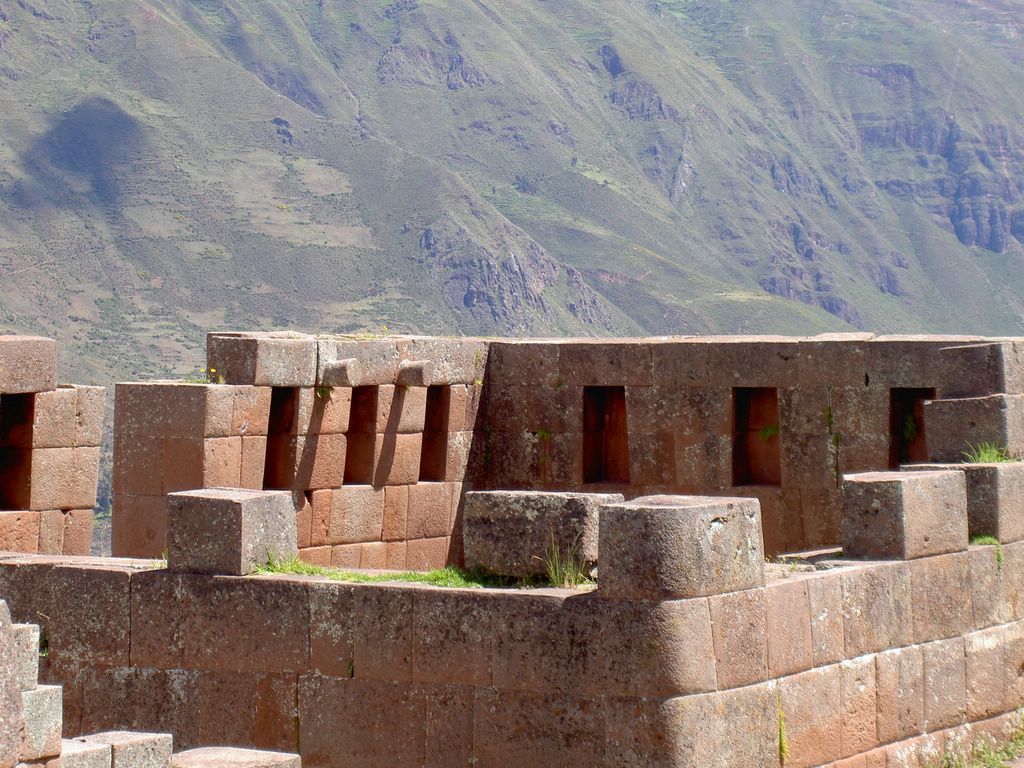
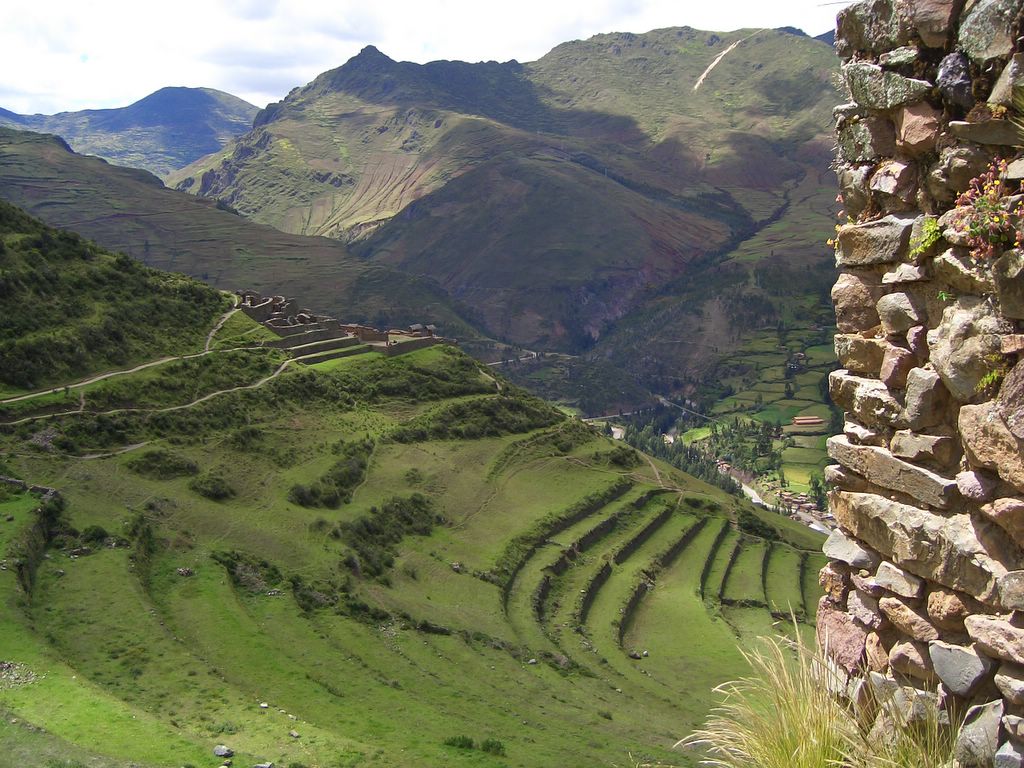
Pisac was the first set of Incan ruins we had come across that looked "lived-in". Like Machu Picchu, it had a little of everything: separate areas for agriculture, warriors,


ceremony,


nobility,


and commoners.


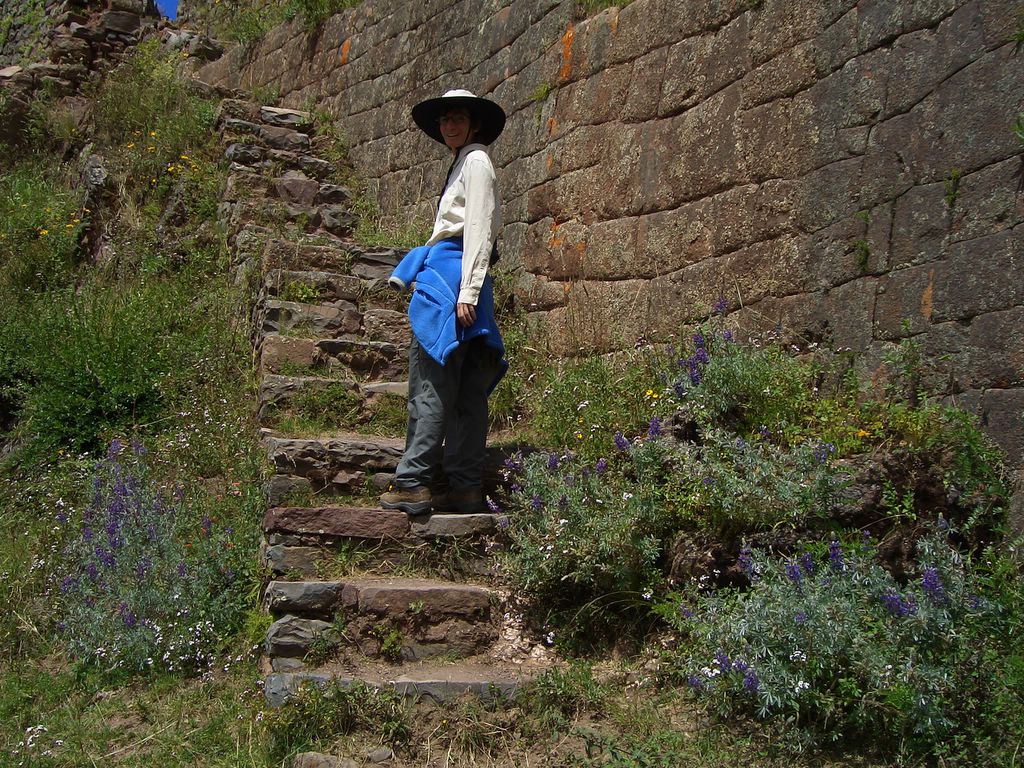
These areas were spread out over a hilltop and connected by paths and stone stairs.


There were lots of nice places to sit and take in the views along the way.


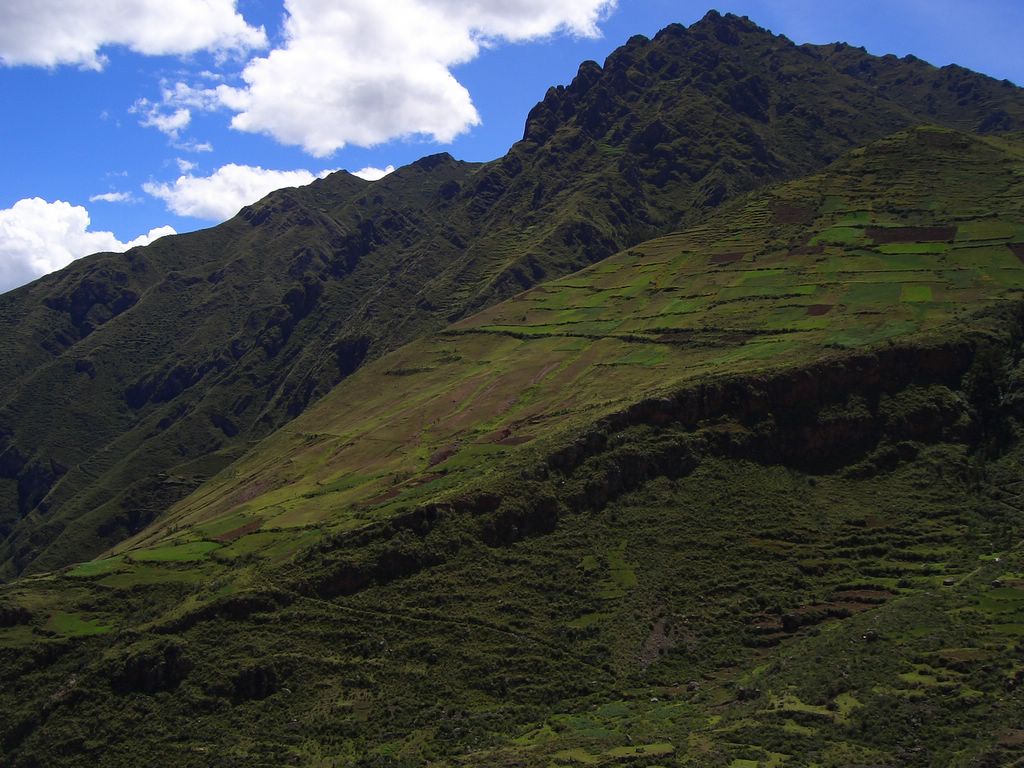
And the surrounding mountains provided a beautiful backdrop.


From the ruins, I could see just how small Pisac was and just how large their famous Sunday market was. From the ruins, I could see that the stalls were covered in blue and white awnings. And these awnings overflowed the central plaza and snaked down 3 of the streets emanating from the plaza.


After walking another hour downhill, we too were snaking our way through those streets. Our boots have been getting a good workout.


Thursday, April 07, 2005

Machu Picchu, Sacred Valley, Peru

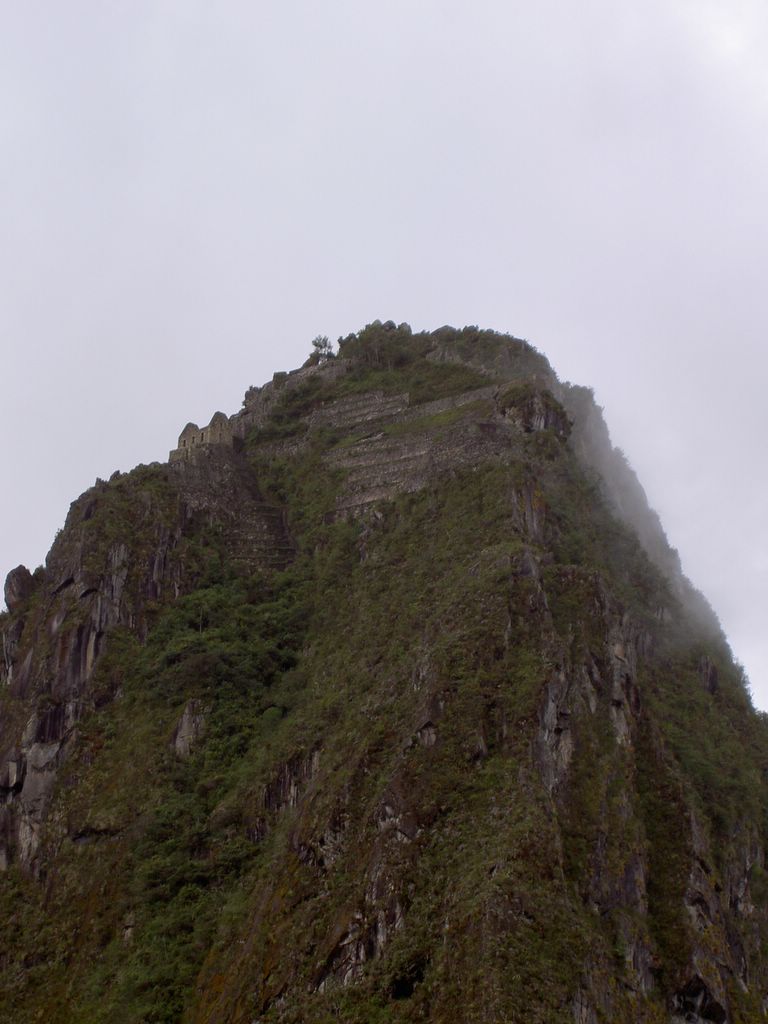
Diane: Machu Picchu was visually exciting, historically revealing, architecturally staggering, and truly lived up to its reputation. This entry is more scrapbook than diary, so enjoy the pictures. Here's the view upon entry to the site. You can see Wayna Picchu, the big peak on the right.


Off to the left is where our guide said the nobility lived.


Also to the left is the Temple of the Sun. It is the only round building we saw in Machu Picchu. During the June solstice, our guide said that the sunlight lights up the boulder inside. She even showed us a copy of photo of what it looks like on that day. For the most sacred building at the site, this doesn't seem like much of a solar marker.


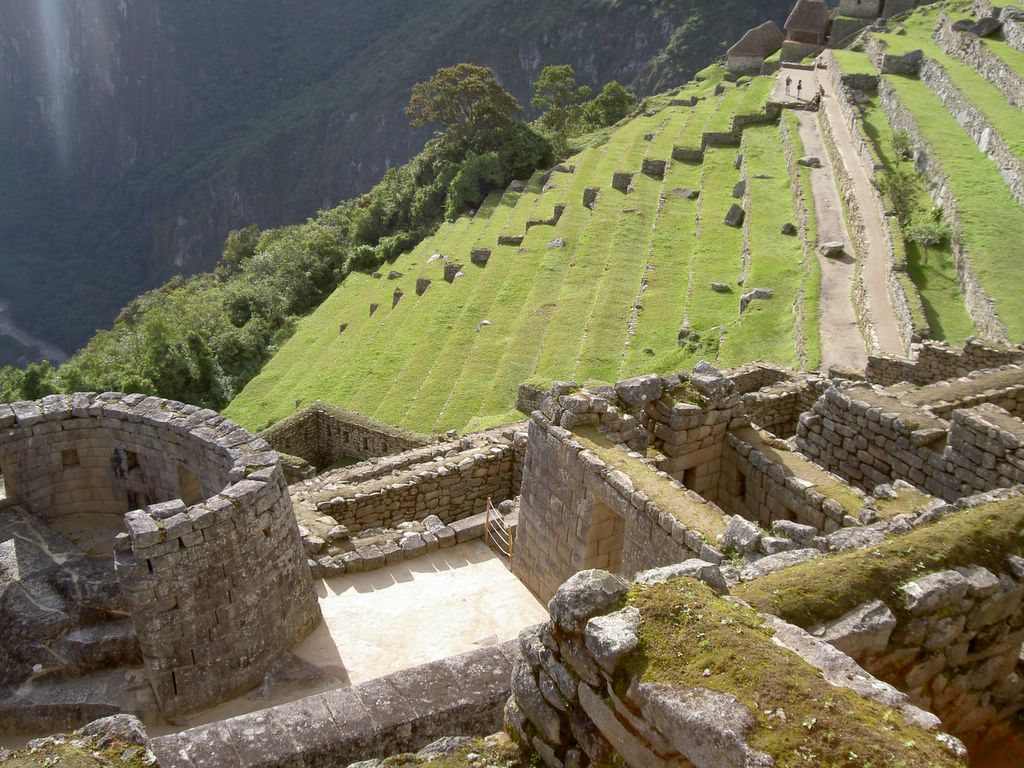
The terraces are in beautiful shape. They never needed to be reconstructed. My guidebook says that this was due to the extensive drainage and support system underneath. It then goes on to say that most of Machu Picchu was built on top of a landfill that was terraced underneath for support.


There are gorgeous views in every direction.


Miki was here 9 years ago. He said that everything was pretty much identical, except that there are a few more areas cordoned off and one or two areas have started falling apart, including the Principle Temple.


Off the same square as the Principle Temple is the Temple of Three Windows, with windows that make a perfect frame for the not-so-distant mountains.


In the small square itself, there is a kite-shaped stone that our guide said represented the Southern Cross constellation. Climbing up to the top from here, there was a large stone with an impressive name, Hitching Post of the Sun, that our guide said was used to make astronomical observations. She also said it was aligned with all the mountains. No specifics were forthcoming, so I have no idea what this meant. This piece of rock was probably the most-photographed object at the site. Just to leave no sacred stone unturned, at the farthest end of the site, where the climb up Wayna Picchu began, stood the Sacred Rock, purported to have high energy properties and also to mimic the shape of the mountain behind it. I saw one tourist, whose guide gave a detailed demonstration of the ritual touching of the rock, using their hands, face, chest, back, and turning around several times. Even though I tried hard to suspend my disbelief, I couldn't help but turn away and burst out laughing.

My favorite piece of real estate was a home in the Secular Area, where the common people lived. From this home, the views were extraordinary.


Wherever I looked, there was a lot of great stone work.


After a bit of deliberating over what appeared to be an impossible ascent, we decided to hike up Wayna Picchu.


We waited at the entrance for TM's blood sugar to return to normal and had an opportunity to see the sweat-smeared faces and hear the panting of those returning from the walk. The hike up to the top included a steep path of stone steps, cable handrails, and exceptional views.


Near the top of the climb, we watched one woman use a rope to climb over a rock slab. She burst out in tears after getting on solid ground. I immediately recognized in her, my own recent episode with fear-of-heights in Vilcabamba. It's nice to know you're not the only one to suffer such irrational feelings, so I went over to share some water and some of my own story. Another woman joined in, who had been scared of heights all her life and was currently on medication to control her anxiety. If we had talked louder, I wonder if we wouldn't have attracted enough people to start a support group. We were all laughing soon enough and I know I felt a lot better.

To make our way to the next site, the Temple of the Moon, we went through a cool tunnel, climbed some of the Incan stone ladder steps up the side of a large rock, clambered down a steep rock face, and then began the steep descent. The Temple of the Moon was built in a natural cave with high-quality Incan stone work. It had fit in precisely with the natural sculptural shape of the existing rock.


It was damp inside, and as a result, there was one rock face covered in moss, that had accumulated a large amount of graffiti over time.


Although TM had been bed-bound for 3 weeks due to back problems, he had rebounded and none of us could keep up with his hiking pace. After reconnecting back at the Sacred Rock, Calliope and Tom found that the energy from the rock was not sufficient enough to reinvigorate them for any new climbs in the area. They went in search of a bathroom and a relaxing spot to have a couple of liters of water. TM, Miki, and I unwittingly headed over to the Caretaker's Hut and then opted to hike to the Inca Bridge. My guidebook says that this hike is only for those who are good with heights. Since I no longer count myself in that category, I am glad that I did not have the foresight to review this section of the guidebook before embarking on the walk. We passed a rainbow, almost always a sure sign that you're on the right path.


Before encountering a bridge, the path petered out into vertical rock, so we lay down on a slab jutting out over the edge.


From there we spotted the bridge, which had no apparent function as it petered out into steep impassable terrain. How did they build this bridge anyway?


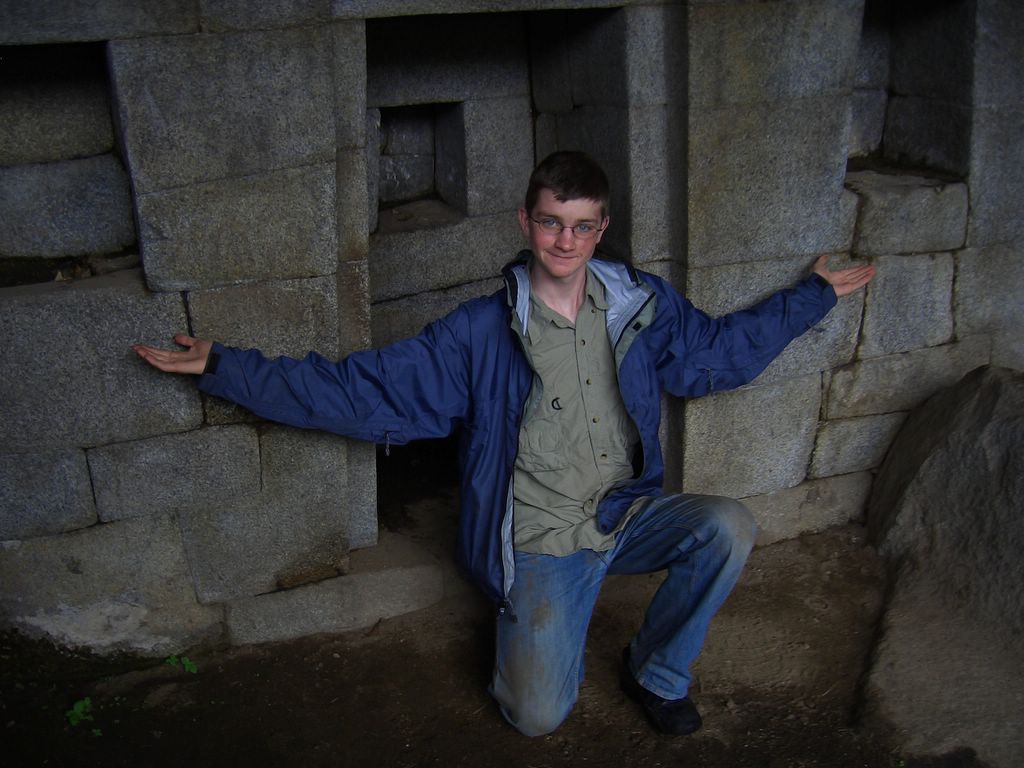
Upon returning to the Caretaker's Hut, we were treated to a classic view and seemingly powerful photo op that compelled each of us to pose in the same spot.